
Discover Barcelona
- About 1.6 million residents (over 5.3 million in the metropolitan area)
- Catalonia, Spain
- CET/CEST (UTC+1 / UTC+2)
History
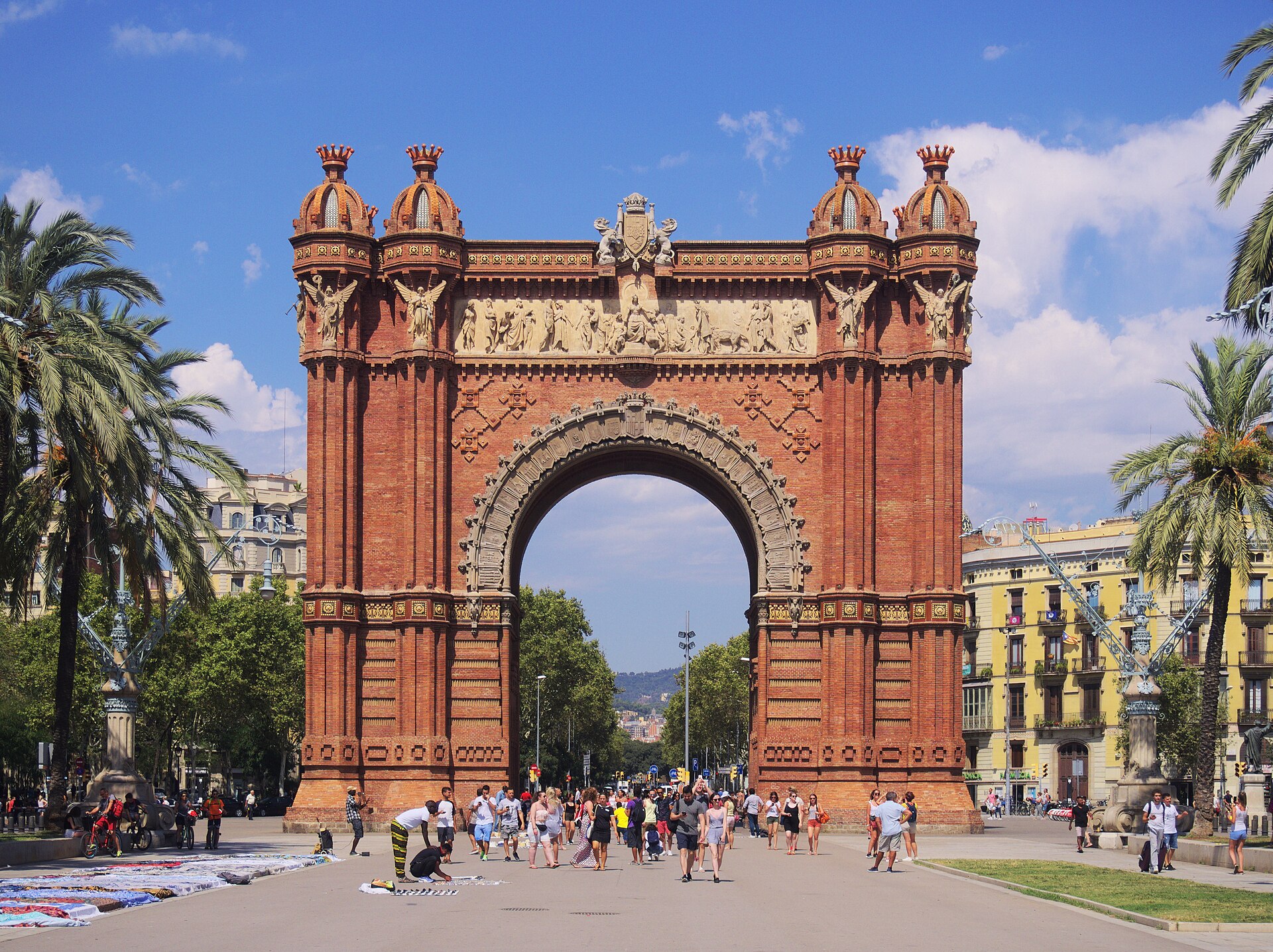
Barcelona began as Barcino, a small Roman colony founded around 15 BC on a modest rise between two streams, its walled perimeter and grid of streets still traceable beneath the tangle of lanes that make up today’s Gothic Quarter. The city grew steadily through Visigothic and then Moorish-influenced rule before becoming the seat of the Counts of Barcelona in the 9th century, whose dynasty eventually merged the county with the Kingdom of Aragon, launching Barcelona’s rise as a major Mediterranean trading and naval power. By the 14th century the city’s merchants and guilds were wealthy enough to fund extraordinary civic and religious architecture largely without royal patronage, most famously the Basilica of Santa Maria del Mar, built in just 59 years by dockworkers who hauled its stone on their own backs.
Barcelona’s fortunes turned after the crown of Aragon merged with Castile and later after its defeat in the War of the Spanish Succession in 1714, when the victorious Bourbon monarchy stripped the city of its historic privileges and built the hated Ciutadella fortress, demolishing an entire neighbourhood to garrison troops meant to keep a resentful population subdued. That repression, and the region’s distinct Catalan language and identity, would resurface again and again over the following centuries, but the 19th century brought a remarkable reversal: industrialisation made Barcelona Spain’s wealthiest and most modern city, cramped inside its old walls until engineer Ildefons Cerdà’s visionary 1859 Eixample plan tore those walls down and laid out the airy grid of wide avenues that still defines the city today.
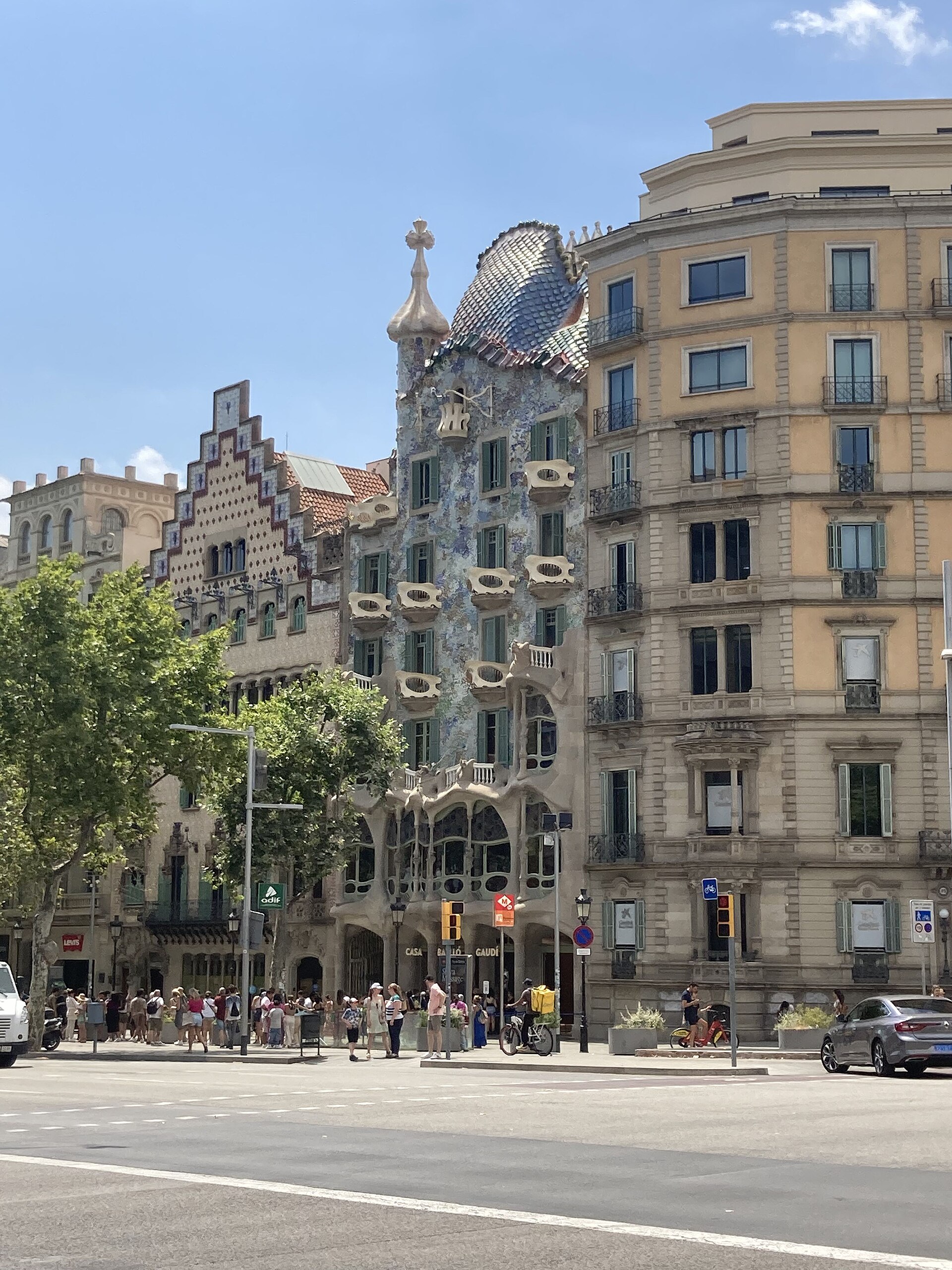
That newly built Eixample became the canvas for Modernisme, the Catalan variant of Art Nouveau, as a generation of architects led by Antoni Gaudí, Lluís Domènech i Montaner and Josep Puig i Cadafalch competed to build the most extraordinary private mansions, apartment blocks and public buildings Europe had seen, from Gaudí’s undulating Casa Batlló and La Pedrera to Domènech’s daylight-flooded Palau de la Música Catalana. This flowering of confidence and wealth culminated in the 1888 and 1929 International Expositions, both staged to announce Barcelona as a modern European capital, before the Spanish Civil War brought devastating bombing, and the Franco dictatorship that followed suppressed the Catalan language and identity for nearly four decades.
Democracy’s return after Franco’s death in 1975 set the stage for Barcelona’s most dramatic modern transformation: hosting the 1992 Olympics, which the city used as a pretext to tear down its derelict industrial waterfront, open kilometres of new beaches to the Mediterranean, and rebuild infrastructure at a pace and scale rarely matched by an Olympic host before or since. The Games turned Barcelona into a global tourism and design capital almost overnight, a status the city has managed with growing ambivalence in the decades since, balancing the economic benefits of mass tourism against pressure on housing, local life and the very monuments, from the Sagrada Família to the Gothic Quarter, that draw millions of visitors here every year.
Did you know?
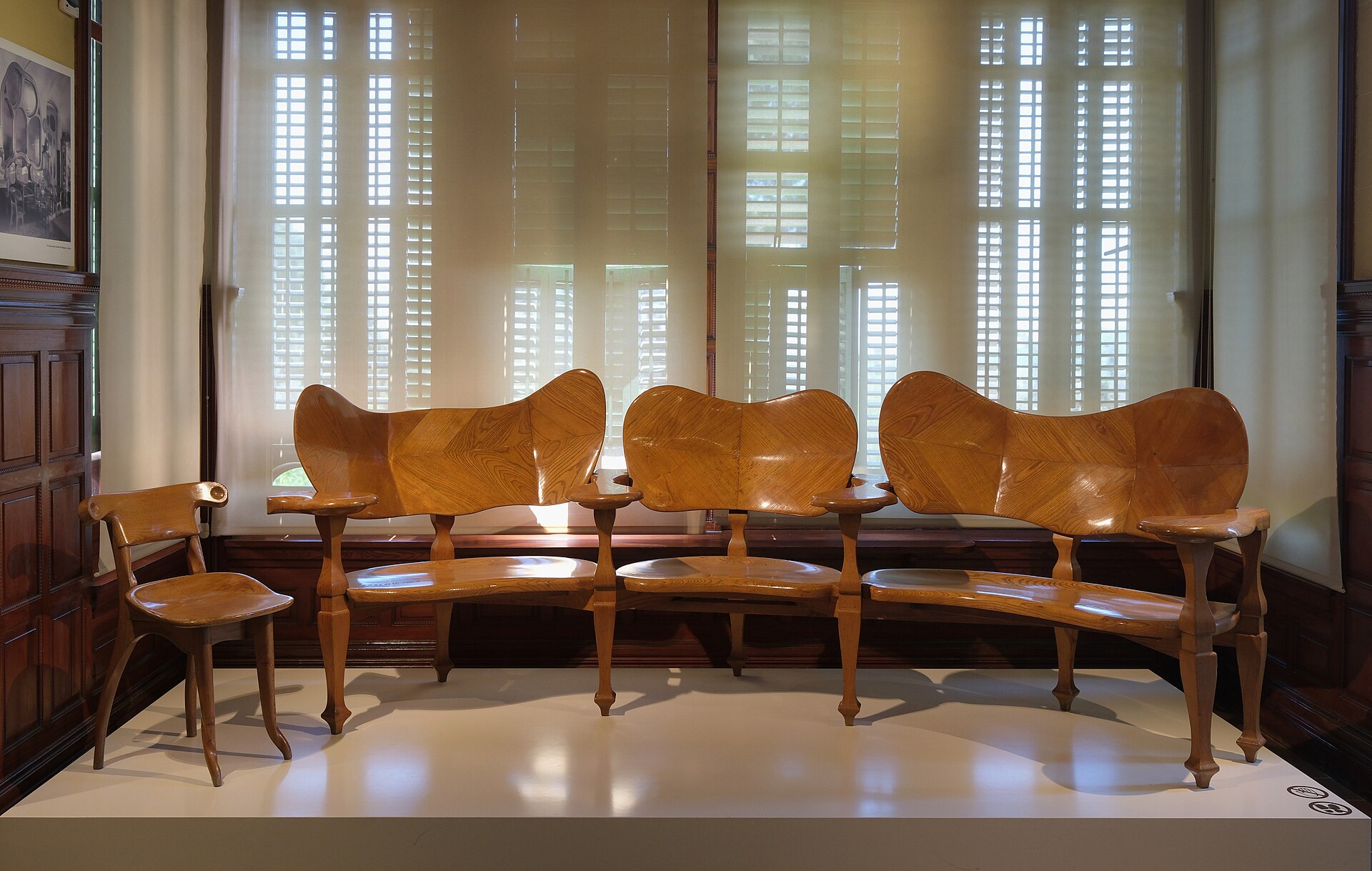
- The Sagrada Família has been under construction since 1882 and is funded entirely by ticket sales and donations, never public money. Gaudí devoted his final years to the site, living there as a virtual recluse, and died in 1926 after being struck by a tram, with less than a quarter of the building complete.
- Park Güell started life as a failed luxury housing development: Eusebi Güell and Gaudí planned 60 villas on the hillside, but only two were ever built, and Gaudí himself lived in one of them for nearly two decades.
- Barcelona Cathedral's cloister has kept thirteen white geese for centuries, one for each year of the martyred Saint Eulalia's short life, according to tradition — they also once served as a living alarm system against intruders.
- The grid-planned Eixample district, with its distinctive octagonal-cornered blocks, was designed in 1859 by engineer Ildefons Cerdà specifically to maximise sunlight, airflow and ventilation for public health, one of the most visionary urban plans of its era.
- The 1992 Olympics transformed Barcelona more than any event since the 1888 and 1929 Expositions, tearing down an industrial waterfront to create the city's beaches and turning what had long been a back turned to the Mediterranean into a front door.
- La Rambla takes its name from the Arabic word 'ramla,' meaning a sandy riverbed, a reference to the seasonal stream that once ran along the outside of the city's medieval walls before being paved over.
Must-see
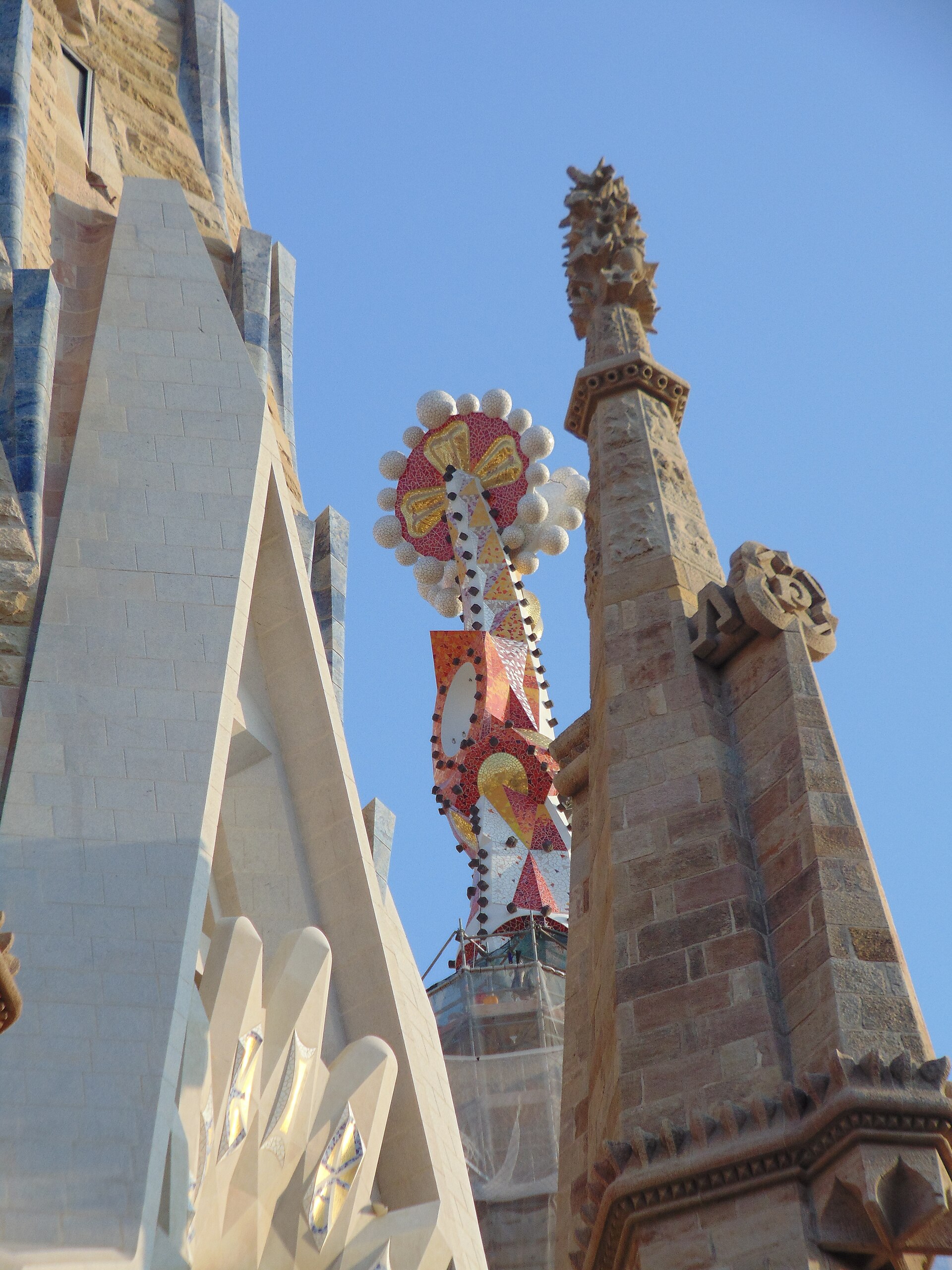
- Sagrada Família — Antoni Gaudí's unfinished basilica, under construction since 1882, still rising over Barcelona with soaring stone forests of columns and light-drenched stained glass.
- Park Güell — Antoni Gaudí's fairy-tale public park above Barcelona, its mosaic terraces, undulating benches and gingerbread-house pavilions born from a failed luxury housing estate.
- Casa Batlló — Antoni Gaudí's 1906 remodel of a townhouse on Passeig de Gràcia, its bone-like balconies and scaled, dragon-back roof making it the most photographed façade in Barcelona.
Local dishes
- Pa amb tomàquet — Toasted bread rubbed with ripe tomato, olive oil and salt, the simple staple that accompanies almost every Catalan meal.
- Escalivada — Smoky roasted red peppers, aubergine and onion, dressed in olive oil and served cold or at room temperature as a starter.
- Botifarra amb mongetes — Grilled Catalan pork sausage served with slow-cooked white beans, a hearty classic found on nearly every traditional menu.
- Crema catalana — A custard dessert flavoured with citrus and cinnamon, topped with a brittle layer of caramelised sugar cracked at the table.
- Fideuà — A Catalan cousin of paella made with short toasted noodles instead of rice, typically cooked with seafood and a garlicky alioli on the side.
- Esqueixada — A refreshing summer salad of shredded salt cod, tomato, onion and olives, dressed simply in olive oil and vinegar.
Practical info
Getting around
Barcelona's metro network covers most of the city efficiently and cheaply, complemented by buses, trams and the Bicing bike-share scheme; the compact Gothic Quarter and Eixample are best explored on foot. Taxis and ride-hailing apps are widely available, but the historic centre's narrow lanes make walking or cycling far more practical than driving.
When to go
May, June and September offer the most comfortable weather while avoiding the peak heat and crowds of July and August, when the city is also busiest with beachgoers. Late September brings La Mercè, Barcelona's biggest annual festival, filling the streets with human towers, fire runs and free concerts.
Good to know
- Book timed tickets for the Sagrada Família and Park Güell well in advance; both regularly sell out days or weeks ahead, especially in summer.
- Stay alert for pickpockets on La Rambla, on crowded metro lines and around major tourist sites, Barcelona's most commonly reported petty crime.
- Many independent shops and some restaurants still close for a midday break in the early afternoon, particularly outside the main tourist districts.
- A dress code applies inside churches and the Cathedral: shoulders and knees should be covered.
- Catalan and Spanish are both official languages; street signs and menus often appear in Catalan first, but Spanish is universally understood.
- Yellow and red flags on Barceloneta and city beaches indicate swimming conditions; check before entering the water on windier days.